
Six weeks ago, I watched a documentary on YouTube about veggies grown in medieval times that, despite easily self-seeding, outgrowing weeds and having mostly better nutritional value than modern-day replacements, have fallen out of common knowledge. Supermarkets don’t stock them as veggies and mainstream seeds catalogues don’t sell them to grow. The reason they’ve fallen out of use (and it seems out of most regular cottage gardener’s memories) seems to be that they don’t fit in with modern big farming growing methods. They either take a while to establish and so do not provide a quick return on investments, or cannot be easily machine harvested and so are expensive to crop, or need eating quickly once picked and so don’t have a long enough shelf life to make them financially viable in supermarkets.
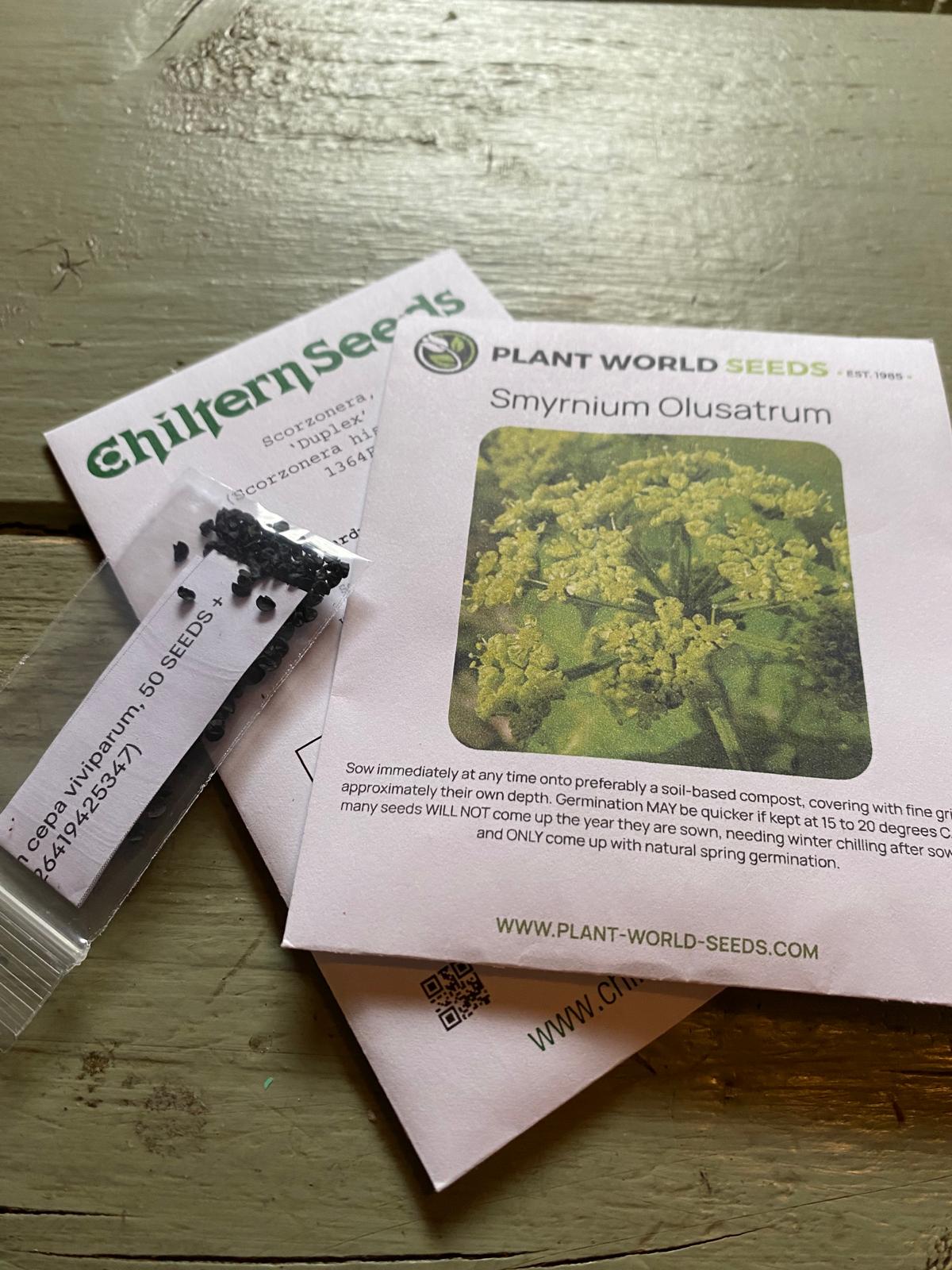
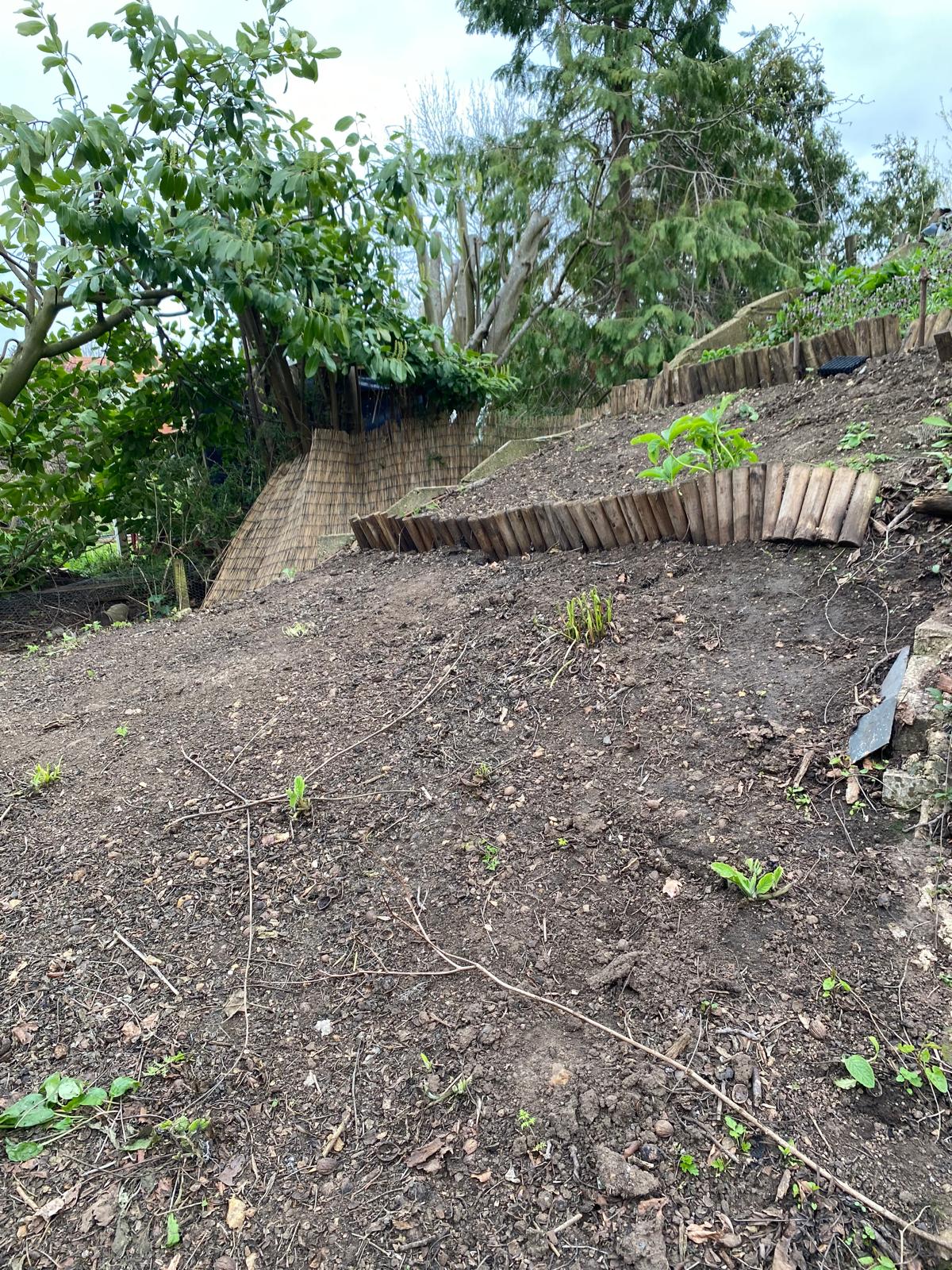
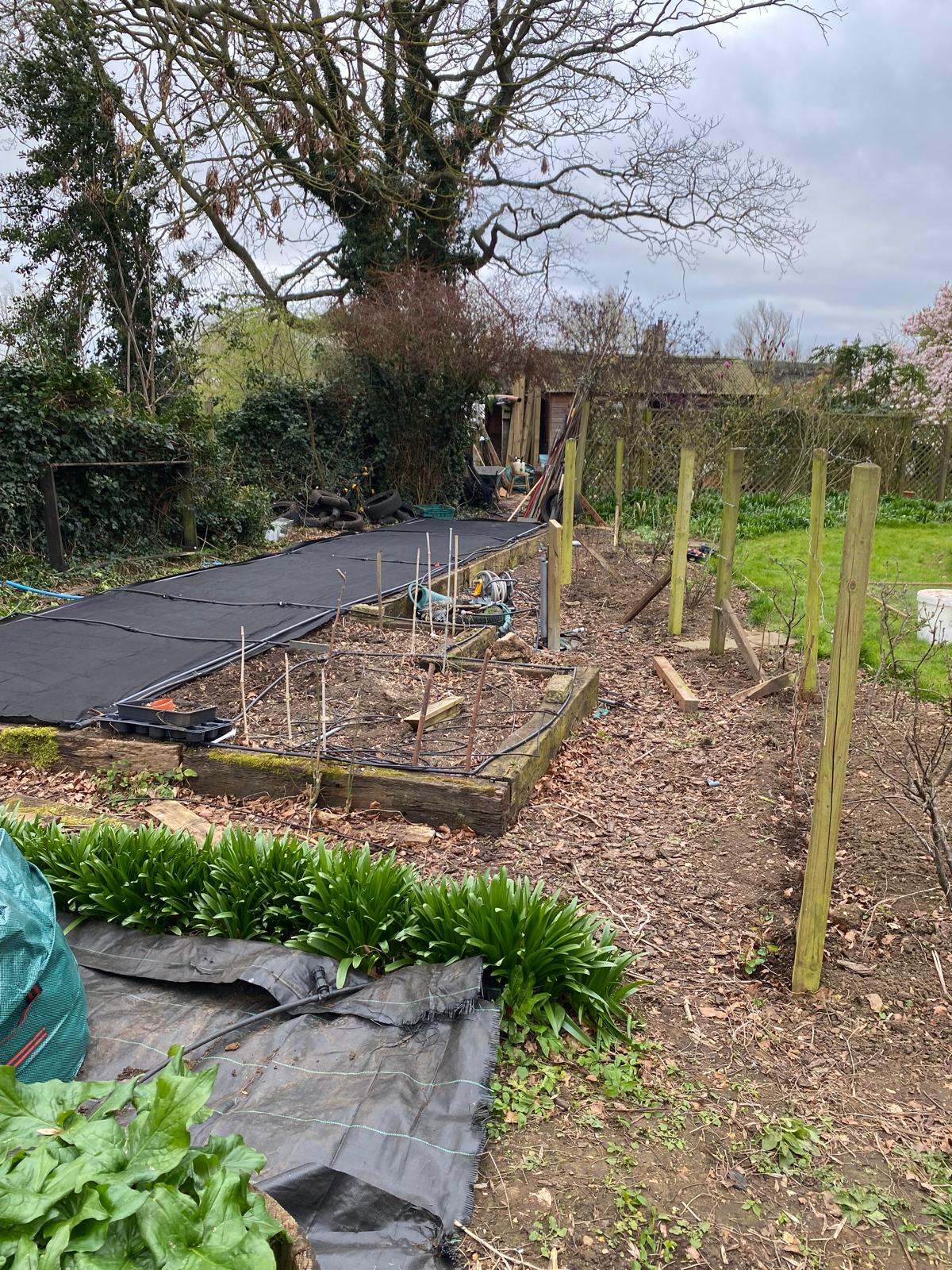
I found all this out by accident, as a result of looking for veggies you can plant out later in the growing season,because we’d had to take our greenhouse down. Between Feb and last week its been out of use in order that a diseased horse chestnut tree could be felled. The tree surgeon said he couldn’t guarantee the greenhouse’s safety in the face of felling such a huge and very rotten tree,right over the top of it. So take it down my husband did. It was meant to go back up the following week but then a flurry of named storms blew in making the felling too dangerous and so we had to wait a further five weeks to put it back up. Thus our seed growing window was heavily reduced which provoked my online research for veggies that grow and/or germinate outside spring. I’d had some success with pak choi last year which you sow straight into the ground after the last frost so I was quite confident there would be veggies out there we could look at. The greenhouse went back up last Friday and will be the starting point for this spring’s regular crops of spuds, tomatoes, courgettes, pumpkins and beans. But in addition to these, this year we’ve now prepped the soil and made space for a whole new selection of medieval crops that will start to get planted in April and finish getting planted in Autumn (some of the seeds need to overwinter before germinating). It has taken a fair bit of research accessing the seeds but hey I’m a research student now, so have been using my newly learned transferrable (it turns out) skills to get six strangely named new (to us) veggies that used to be the mainstay of potager’s gardens in the UK. Sadly there is one I haven’t been able to source yet but I will keep on trying because I love the idea that we’re bringing something old (and to us, new) back to life (hopefully). Also, having lots of different crops that reseed and look after themselves seems like a great way forward and much more suitable to a potager’s garden like ours, than growing loads and loads of lines of crops like commercial farmers do, that need constant watering and weeding and replacing every year. Hope this new system will mean less gluts and dearths and that having small amounts of different veggies that come up in different months we will be adding interesting variation to our diets. What is really exciting about these old style veggies though is that amazingly, some are drought and frost resistant. I’ll document what all the new seeds/plants will be in my next blog, and also where I bought them from, so anyone who’s interested can try growing some too. Here’s a photo of the prepped up soil ready for all the lovely veggies to take up residence. And some of the seeds as yet to be sown.
Whilst all this seedy stuff has been going on in the garden, I’ve also been beavering away at my PhD research. I had my second supervision meeting yesterday which really cemented in my head how much I love these meetings. They’re a mixture of: touching base, getting expert perspectives and guidance, a cheerleading session for those of us (i.e. me) with persistent imposter syndrome, reporting back on stuff done since the previous session and setting a goal/target of things to do /talk about next time. Both my supervisors are truly expert in their fields, their minds brimful of knowledge. I count myself as very lucky to have them as mentors. Below is a flash fiction style narrative list of some of the things I’ve done between my first and second supervisions.
- Written a first draft first flash for my PhD creative component novella-in-flash (I say first but it might not be first in the story, just the first to get written).
- Read 3 novellas-in-flash, and the novel Waterland by Graham Swift which isn’t written ‘in flash’ because the chapters are too long, but which uses many of the component, restrictions and techniques I’ve been identifying as characteristic of ‘in-flash’ writing.
- Read everything I could find by Mark Fisher who is a postmodern genius.
- Attended researcher develop sessions on: setting up a thesis doc in Word, Managing Perfectionism and What Should a Literary Review Do?
- Won a York St John Uni International Women’s Day Poster comp prize for ‘best feminist engagement’. My poster was displayed in the post grad centre for IWD and students voted for the winners. There’s a copy of my poster at the bottom of this blog entry. I got a certificate (I love a certificate) and a £15 voucher which I intend to spend on wine and tacos. Very pleased I took part in this, because flash lends itself really well to posters I reckon and I’m now I’m properly interested in doing more.
- Started another poster for the Humanities Post Grad Research Annual Flagship Event in May, which this year is going to include the launch of journal Curiositas, a new publication established and staffed by postgraduate researchers from the School of Humanities. Alongside this will be a celebration of postgraduate research currently taking place across the school in the form of posters done by the Postgrad Researchers themselves. These posters will aim to give a taste of projects underway and I’m going to enter one for my project. I’ll post it here when it’s done, but starting this poster made me realise that writing ‘in-flash’ needn’t be constrained to novella, and that, in fact, I’ve written micros ‘in-flash’ already. I’m putting a micro I wrote ‘in-flash’ on the poster. This 300 word micro is made up of three standalone drabbles which when read together imply another story. This made me question what writing ‘in-flash’ truly is. In order to try to find out I’ve decided to take a short story I wrote a couple of years ago, which was published in my collection, Hostile Environments and rewrite it so it’s told ‘in-flash’. I chose a quite fragmentary short story of 2200 words that’s not, I think, written ‘in-flash’ to investigate similarities and differences. So, as an experiment, I’m going to restructure it, so it becomes what I reckon is an ‘in-flash’ story, and then, document what has makes the change. It could be all or none of the following: making each fragment narratively complete and standalone; making each (now) standalone flash be 1000 words or less; giving each individual standalone flash it’s own title; making the ending of each now standalone flash ring like a bell to give readers moments of narrative pause; making the bigger picture of the combined flash fictions less narrative arc and more narrative mosaic; bringing white spaces to the page after each interior narrative ending. therefore foregrounding emptiness and silence so they become an integral part of the story-telling.
Then, I’m then going to write an essay about what I find out. Should be pretty interesting.
Seems to me I’ve been having quite the accidental learning time over the last few weeks. I’d never have thought about doing this essay without having started the poster, and I’d never have known about medieval veggies without the gone-greenhouse. Really does make you think about knowledge, its acquisition and perpetuation. Hardly anyone knows about novella-in-flash let alone what ‘in-flash’ storytelling is, and though everyone used to know about medieval veggies, practically no-one does anymore. It’s like there’s a hierarchy of well-known stuff that if it becomes too generally accepted, pushes other alternatives out of existence. I’m starting to think that might be the case with creative writing too. Short stories that don’t comply with long-accepted shapes very often don’t get published. They need a narrative arc with rising action, a crisis, a climax to be thought of as any good’. And you have to have a character who changes or goes on a transformational journey. Well work ‘in-flash’ very often doesn’t do these things. I wonder if that’s why writers don’t give it a go?. Maybe ‘in-flash’ writing’s face don’t fit the current publishing industry, that wants cliff hangers and page turners and nothing all that new. Maybe ‘in-flash’ writing is a bit like yesterday’s veg, not able to thrive in the face of big business and profits. It’s defo a thought.
 Jan Kaneen Creative and Other Writing